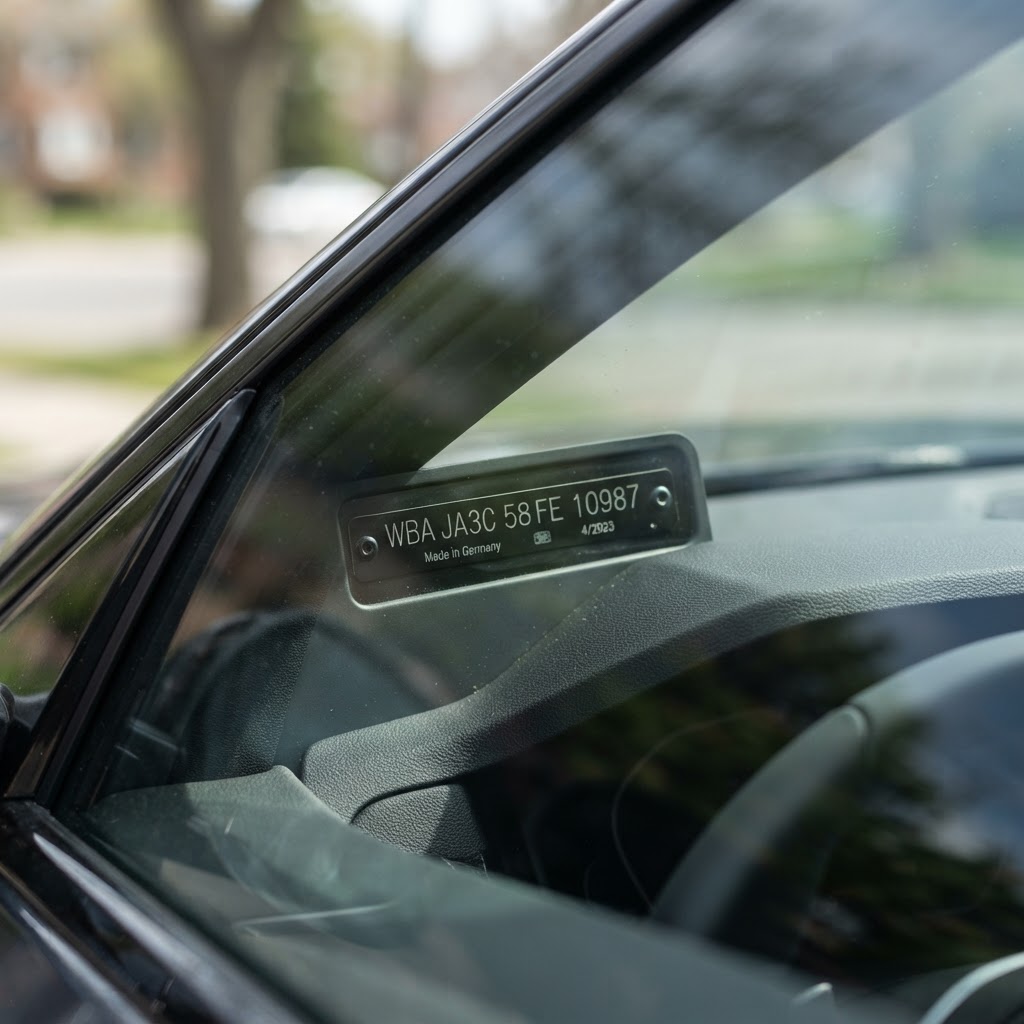
What Is a VIN?
A Vehicle Identification Number (VIN) is a unique 17-character code assigned to every motor vehicle manufactured since 1981. Think of it as the vehicle's fingerprint — no two vehicles share the same VIN, and the number encodes key information about the car's origin, specifications, and identity.
VIN Structure: Three Sections
The 17-character VIN is divided into three sections, each serving a specific purpose.
Section 1: World Manufacturer Identifier (WMI) — Characters 1–3
The first three characters identify the country of manufacture and the manufacturer.
- Character 1 — Country of origin. '1', '4', '5' = USA; '2' = Canada; '3' = Mexico; 'J' = Japan; 'W' = Germany; 'S' = UK
- Character 2 — Manufacturer. 'G' = General Motors; 'F' = Ford; 'H' = Honda; 'T' = Toyota
- Character 3 — Vehicle type or manufacturing division
Section 2: Vehicle Descriptor Section (VDS) — Characters 4–9
Characters 4–8 are manufacturer-specific codes describing the vehicle. They encode:
- Body style (sedan, SUV, truck, coupe)
- Engine type and displacement
- Model line
- Restraint systems
Character 9 is the check digit — a mathematical calculation using all other digits that allows computers to verify a VIN hasn't been tampered with or fabricated. A VIN that fails the check digit test is almost certainly cloned or forged.
Section 3: Vehicle Identifier Section (VIS) — Characters 10–17
- Character 10 — Model year. Each year is represented by a letter or number. For reference: 'G' = 2016, 'H' = 2017, 'J' = 2018, 'K' = 2019, 'L' = 2020, 'M' = 2021, 'N' = 2022, 'P' = 2023, 'R' = 2024, 'S' = 2025, 'T' = 2026
- Character 11 — Manufacturing plant
- Characters 12–17 — Sequential serial number unique to each vehicle
A Real VIN Decoded: 1HGBH41JXMN109186
| Characters | Value | Meaning |
|---|---|---|
| 1 | 1 | Manufactured in USA |
| 2 | H | Honda |
| 3 | G | Passenger car |
| 4–8 | BH41J | Accord, 4-door sedan, 2.4L engine |
| 9 | X | Check digit (valid) |
| 10 | M | Model year 2021 |
| 11 | N | East Liberty, Ohio plant |
| 12–17 | 109186 | Sequential serial number |
Where to Find Your VIN
Your VIN appears in several places:
- Dashboard (driver's side) — visible through the windshield at the bottom-left corner. This is the easiest to spot from outside the car.
- Door jamb sticker — open the driver's door and look for a white sticker on the door frame or B-pillar.
- Engine bay — often stamped on the firewall or a plate on the engine block.
- Vehicle title — always printed prominently on the ownership document.
- Insurance card — listed on your policy declaration and insurance card.
Why VIN Matters for History Checks
Every accident, title transfer, theft report, salvage declaration, and odometer reading is recorded against the VIN in state and federal databases. When you run a VIN history report, you're pulling every event ever recorded against that unique identifier — across all 50 states.
This is why VIN cloning — where criminals apply a stolen VIN to a different vehicle — is such a serious fraud. The cloned car gets a clean history while the real vehicle's crimes are hidden. A VIN check can reveal cloning attempts through inconsistencies like mismatched check digits or specs that don't match the recorded model.
Run a full VIN report on VINCheck USA for $7.99 and get the complete history on any US-registered vehicle in minutes.